Faculty Leaders

JoVia Armstrong , Music
Assistant Professor (Composition & Computer Technologies), Department of Music
JoVia Armstrong is a percussionist, composer, and educator whose work blends rhythm, technology, and experimental composition. Born in Detroit, Armstrong has performed with artists including El DeBarge, Nicole Mitchell, Isaiah Sharkey, and Malian musicians Ballaké Sissoko and Babani Koné. Her performance style bridges acoustic and electronic percussion, drawing influence from a diverse range of global traditions.
She leads the electroacoustic ensemble Eunoia Society, which explores sound as a healing tool through immersive audio and contemplative composition. Their albums The Antidote Suite (2022) and Inception (2023) received widespread acclaim in The New York Times, DownBeat, JazzTimes, and The Wire. JoVia is also a member of the Detroit-based group Musique Noire and formerly served as percussionist and tour manager for JC Brooks and the Uptown Sound.
An active educator and mentor for over two decades, she taught digital media and audio production and served youth in Chicago through YOUmedia and the Digital Youth Network. Armstrong earned her Ph.D. in Integrated Composition, Improvisation, and Technology from UC Irvine. She now serves as Assistant Professor of Music at the University of Virginia, where she teaches composition and electronic music while researching the intersection of Black music, sonic healing, and urban space.

Anna Beecher, Creative Writing
Assistant Professor in Creative Writing; Director of the Minor; Director of Undergraduate Programming in Creative Writing
Anna Beecher is a writer and theatre maker from the United Kingdom. Her first novel, 'Here Comes the Miracle', was shortlisted for the Sunday Times Charlotte Aitken Trust Young Writer of the Year Award. Her memoir in essays, 'We All Come Home Alive', was published in 2025 and was a Guardian Book of the Day. Anna's writing has appeared in Granta, The Guardian, Elle and The Observer. Her performance work has been presented by venues including Lincoln Center, The Barbican, Southbank Centre and Glastonbury Festival. For more information, see www.AnnaBeecher.com
AB Brown , Drama
Associate Professor, Department of Drama
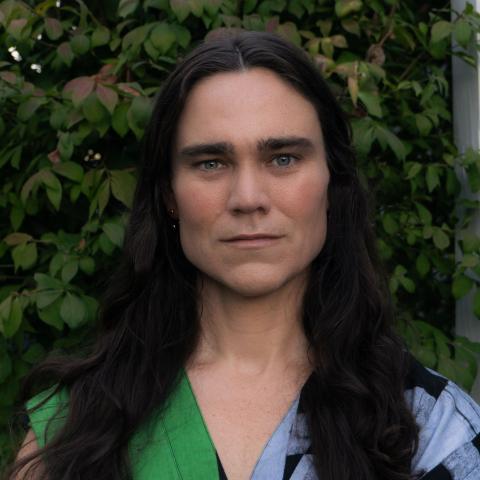
AB Brown (she/they) is a research-based artist, writer, and educator. She creates site-responsive, socially engaged, and participatory performances that unearth the material histories of place, social structures , and the more than human. Brown is currently developing two large scale projects: a haunted botany, which traces the colonial histories of various plant species and how they continue to impact the present; and, The Garden of Trans Care, which animates queer and trans relationships to the natural world as a way to transform violent social structures. Their work has been supported by a Mellon Emerging Faculty Leaders Award from The Institute for Citizens & Scholars, as well as by the MAP Fund, the Ellis-Beauregard Foundation, the Foundation for Contemporary Art, the Buck Lab for Climate and Environment, the Portland Institute of Contemporary Art, and the New England Humanities Consortium.
Brown’s scholarship builds on a decade of creating performance with LGBTQ asylum seekers in South Africa and demonstrates the role of queer and trans performance in reimagining the colonial legacies of international asylum policy and its effects on the representation of refugees and their everyday lives. Her writing can be found in The Brooklyn Rail, the edited anthologies Queer Nightlife and Queer and Trans Migrations: Dynamics of Illegalization, Detention, and Deportation, Women and Performance: a Journal of feminist theory, Text and Performance Quarterly, and the Journal of African Cultural Studies, among others.
Brown received their Ph.D. in Performance Studies from Northwestern University with specializations in Postcolonial Theory and Gender & Sexuality Studies.
Mona Kasra, Drama, Interdisciplinary, Studio Art
Associate Professor of Digital Media Design, Department of Drama and Department of Art; Associate Director of the Institute for Arts and Humanities; Director of the Miller Arts Scholars program
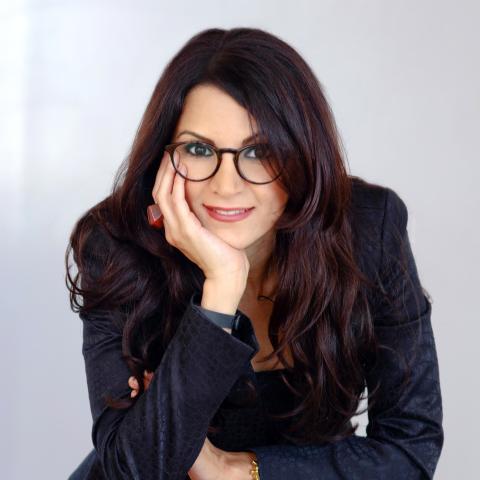
Mona Kasra is a new media artist, designer, and interdisciplinary scholar. Her research examines the political, cultural, and aesthetic implications of visual media technologies, with particular interests in synthetic media and artificial intelligence, visual culture, representation, and authenticity. Her creative practice works across moving image, digital media, installation, and performance, experimenting with emerging technologies as both artistic tools and systems that shape how we see, represent, and experience the world. She frequently collaborates with artists, musicians, choreographers, and theater-makers to explore new relationships among media, performance, narrative, and audience experience. Her artwork has been exhibited nationally and internationally, and she has served as a curator and juror for international exhibitions, festivals, and conferences, including Ars Electronica and SIGGRAPH. As a projection and media designer, she creates work for theater and live performance, with four Helen Hayes Award nominations for Outstanding Projections/Media Design.
Her scholarship has appeared in journals such as New Media & Society, The Communication Review, Journal of Dance Education, and Media and Communication. She holds a Ph.D. in Arts & Technology from the University of Texas at Dallas, an M.F.A. in Video/Digital Art from California State University, Northridge.

Kathryn Schetlick, Dance
Assistant Professor, Department of Drama & Dance
Katie Schetlick is a dance artist and educator who summons movement to challenge static, singular notions of “the human” and “the body”. In her research, creative work, and teaching, she centers embodied learning, collaborative scholarship and making, and active reimagining through praxis.
Katie uses dance and movement to grapple with how ideas of humanity appear on stage and in everyday life and proposes practices that critically play with the structures of theatrical space —architectural, historical, affective— to destabilize fixed understandings of what it means to be human. Appearing as installations, movement scores, site-responsive performances, choreographed walks, and dances, Katie’s work, often in collaboration with other artists and scholars, has been presented in Brazil, Egypt, Poland, the Netherlands, Austria and several cities in the United States. Active and ongoing collaborations include projects with Zena Bibler and with Conrad Cheung and Anna Hogg as part of the artist collective, nonhumanities.
Katie holds an MFA in Dance from Hollins University, an MA in Performance Studies from New York University’s Tisch School of the Arts, and a BFA in Dance from the Ailey/Fordham BFA program.
William Wylie, Studio Art
Commonwealth Professor of Art, Department of Art
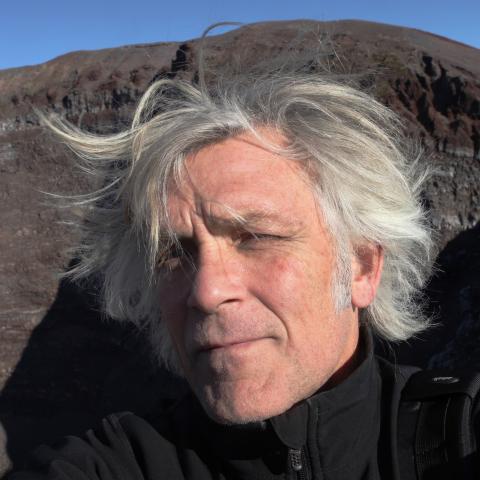
William Wylie, Commonwealth Professor of Art, has been directing the photography program at UVA since 2000. He received a Mead Honored Faculty Award at UVA in 2003 and has been the director of the Study Abroad Program in Italy since 2007. He was Director of Studio Art for eight years. His photographs and films have been shown both nationally and internationally and can be found in the permanent collections of the Metropolitan Museum of Art, National Gallery of Art, Smithsonian American Art Museum, The Philadelphia Museum of Art, Virginia Museum of Fine Art, and Yale University Art Museum, among others. He received a Guggenheim Fellowship in photography in 2005, a VMFA Professional Fellowship for 2011 and was the Doran Artist in Residence in Italy through the Sol LeWitt Foundation and the Yale University Art Museum in 2012 and 2015. He has been an Artist in Residence at the American Academy in Rome and the Center for Land Use Interpretation in Utah. Wylie has published six books of his photographic work: Riverwalk (2000), Stillwater (2002), Carrara (2009), Route 36 (2010), Pompeii Archive (2018) and A Prairie Season (2020). His forthcoming book, The Eighty-Eight, Photographs from a Japanese Pilgrimage will be published in February 2026.